

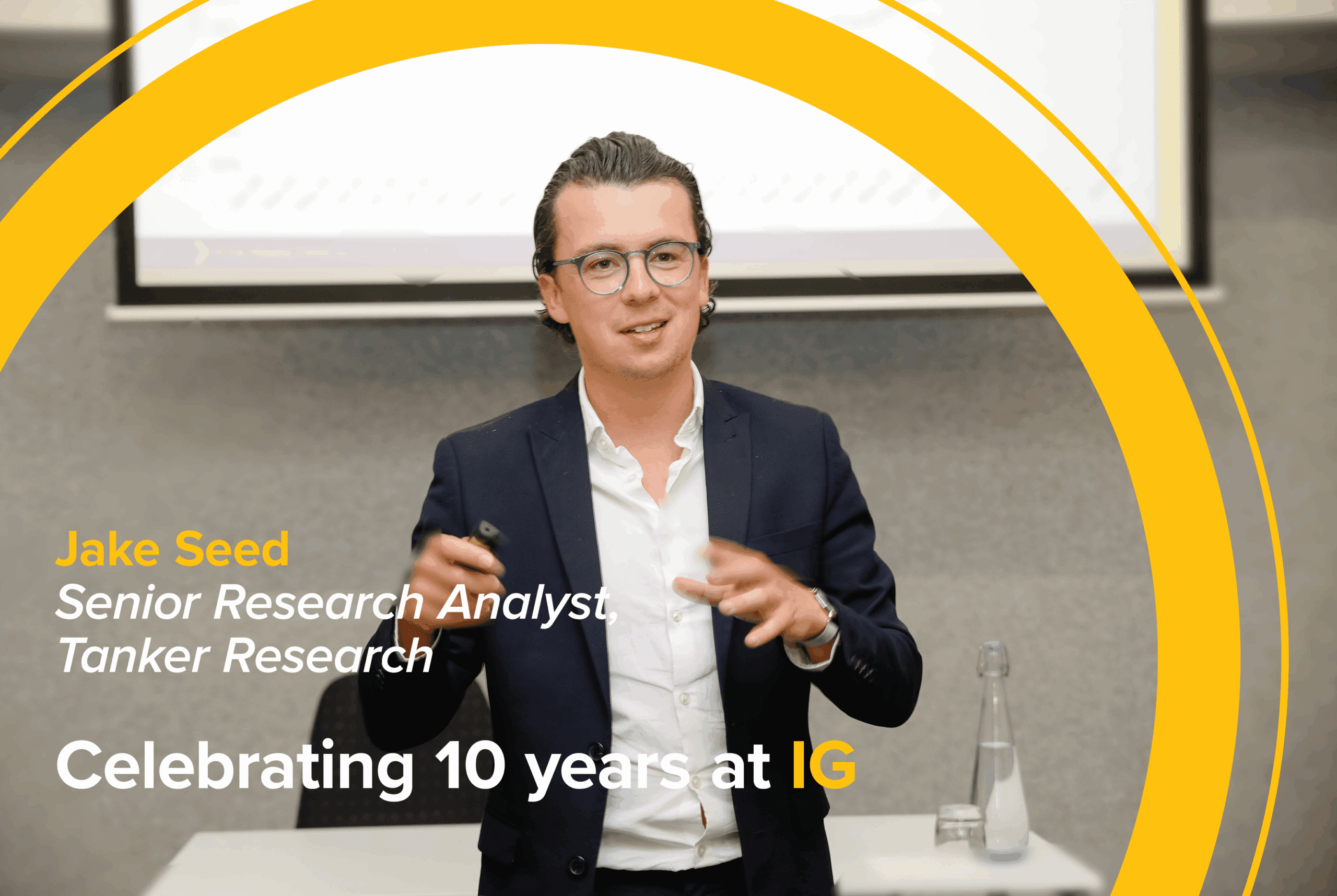
A decade ago a fresh faced economics graduate from Queen Mary, University of London joined IG’s tanker research department. Fast forward to 2025 and Jake Seed is now a senior research analyst responsible for gathering, interpreting and presenting the data needed to support shipowning and chartering clients, amongst others.
By his own admission, shipping was not a career path that Jake had expected to take. As a student at university, his campus was close to the grand Canary Wharf towers in east London’s financial district.
“I assumed that I would probably go and work in banking in one of those shiny towers”, he says.
However a summer internship at bunker broker Cockett Marine Oil opened his eyes to the complex and fascinating world of international shipping.
Researchers at shipbroking companies perform a vital role.
They ensure that their colleagues and clients are provided with timely insights on vessel supply and cargo demand. They gather, clean and consolidate data: everything from ship engine types to trading patterns, and package it in a manageable way. They interpret the signals from the data, assess the impact of geo-political decisions and make sense of conflicting information.
It’s a fast moving role and one which requires an ability to quickly understand complex issues, connect the dots and then package this information into actionable intelligence.
Jake says that it is the variety and on the job learning that he loves. Clients expect him and his team to have considered the impact of a huge range of issues on their business.
“From insurance to the carbon intensity of various fuel types or how shipyards function, every day is a school day at IG.” IG also supported his two and a half years study for the Institute of Chartered Shipbrokers, giving him a solid foundation in the fundamentals of the shipping business.
Asked to name a piece of work in his ten years at IG that he is most proud of, Jake cites the scenario analysis that the tanker research department undertook in the early days of the Russia-Ukraine war.
“I’m very proud of the quality of the analysis that we put out. In a very short time we had to model the impact of oil price caps, insurance issues and redirection of oil flows on the tanker markets. These were huge scale changes and looking back at what actually played out, I can see that we did a pretty good job.”
According to Jake, it is the strong collegiate and supportive atmosphere at IG which has allowed him to thrive.
“The past 12 months have been extraordinary in terms of what is happening around the world and its impacts on shipping. From wars to elections, tariffs to extreme weather, our brokers and clients expect good quality expert analysis quickly. Yes, shipbroking is a high pressure industry, there is always support from my co-researchers and the brokers at the coal face.”
But the sheer volume of data available to researchers is a challenge.
“It’s easy to potentially drown in data”, says Jake. He notes that IG generates a huge amount of proprietary data as well as takes in third party information. Successful researchers do not simply hoard data, but build on and structure the data to enable intelligent and useful analysis.
With the rapid advances in AI, there are clearly changes to the way in which researchers work already underway. However, he believes that there is always a place for someone who can interpret, present and discuss the data. He advises anyone involved in research to immerse themselves deeply in the data.
“You need that hands on element to develop your own narrative. You can’t just rely on having a surface level knowledge of what you are presenting. That’s what the clients need and expect.”